

Key Insights
- Exhaust smokes more in cold weather mainly because cold air makes the normal water vapor from combustion easy to see — in most cases it is harmless condensation, not an engine problem.
- Normal cold-start vapor is white, thins out within a few minutes, and disappears once the engine is fully warm.
- Thick white smoke that does not fade after warm-up can mean coolant is burning inside the engine, often from a head gasket — watch for coolant loss or overheating alongside it.
- Blue smoke points to burning oil, and black smoke points to too much fuel — neither one is a normal cold-weather effect.
- Bring the car in if smoke stays heavy after warm-up, changes color, or shows up along with overheating, fluid loss, rough running, or an unusual smell.
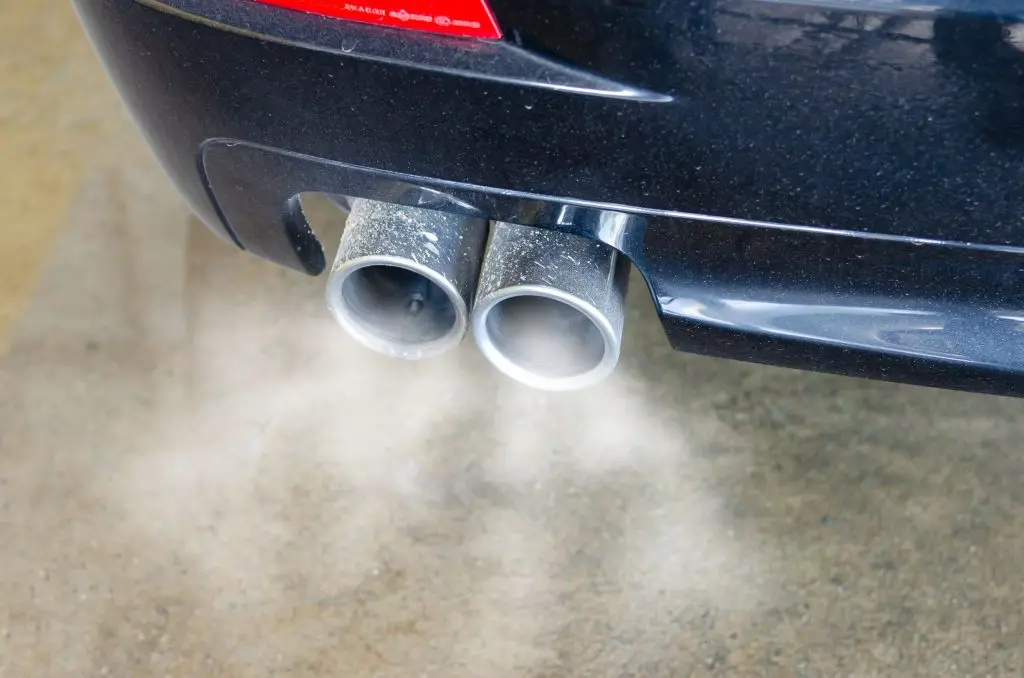
Your exhaust smokes more in cold weather mainly because cold air makes the ordinary water vapor from combustion much easier to see — in most cases, it is harmless condensation and not a sign of engine trouble.
You start your car on a cold morning and see a thick white cloud pouring from the tailpipe, when on a warm day you would barely notice any exhaust at all, and it is easy to assume something has gone wrong under the hood. Some types of exhaust smoke do point to real problems, though — coolant leaks, burning oil, fuel issues, or other engine trouble — so the key is to look closely at the color, smell, timing, and how long the smoke lasts.
Why Does My Exhaust Smoke More in Cold Weather?
Your engine creates water vapor during normal combustion. Hot exhaust gases carry this moisture through the exhaust system and out of the tailpipe.
On a warm day, much of that moisture is difficult to see.
Cold air changes things.
When hot, moist exhaust meets cold outside air, the water vapor quickly cools and forms tiny droplets. Those droplets create the white cloud you see behind your car.
It is much like seeing your breath on a freezing morning. Your breath contains moisture all year, but cold air makes it visible.
Your exhaust works in a similar way.
You may even notice water dripping from the tailpipe. A small amount of clear water can be a normal result of condensation.
Normal White Vapor Should Fade as the Car Warms Up
The easiest way to separate normal cold-weather vapor from a possible problem is to watch what happens as the engine warms up.
Normal condensation is usually most visible just after a cold start.
Moisture can collect inside the exhaust while the car sits overnight. Once you start the engine, heat begins pushing that moisture out.
The white cloud should gradually become thinner as the engine and exhaust system reach normal operating temperature.
If the exhaust looks normal after several minutes of driving and the car runs well, you are probably seeing ordinary condensation.
Thick white exhaust that continues after the engine is fully warm deserves more attention.
Thick White Smoke Can Point to Burning Coolant
Not all white exhaust is harmless.
Coolant can sometimes leak into the combustion chambers and burn along with the air and fuel. This can produce thick white smoke that does not disappear after the engine warms up.
A damaged head gasket is one possible cause. A cracked cylinder head or another internal engine leak may create similar symptoms.
You might also notice:
- Coolant level dropping without an obvious external leak
- Engine overheating
- Rough running or misfires
- A sweet smell from the exhaust
- Thick white smoke during normal driving
Do not open a hot cooling system to check the coolant. Hot coolant can be under pressure and cause serious burns. Let the engine cool and follow the vehicle manufacturer’s checking procedure.
Persistent white smoke combined with coolant loss should be inspected soon.
Blue Smoke Usually Means Oil Is Burning
Cold weather does not turn normal exhaust blue.
Blue or bluish-gray smoke often means engine oil is reaching the combustion chambers.
The timing of the smoke can provide a useful clue.
For example, your car might release a short blue puff when you first start it in the morning. Worn valve seals can sometimes allow oil to enter the cylinders while the vehicle sits.
Blue smoke during acceleration may point toward a different oil-control problem. Worn piston rings, turbocharger trouble on turbocharged engines, or other internal wear can also allow oil to burn.
Check your engine oil level if you regularly see blue exhaust.
A falling oil level paired with repeated blue smoke is a good reason to schedule an inspection.
Black Smoke Can Signal Too Much Fuel
Black exhaust points in another direction.
It often means the engine is receiving too much fuel for the amount of air available for combustion.
Engines change their fueling during cold starts. A cold engine needs help reaching a stable operating temperature, so its fuel-management system may behave differently during the first few minutes.
Heavy black smoke is not something you should simply blame on winter.
Possible causes include fuel injector problems, restricted airflow, faulty sensors, or other fuel-management issues. Diesel engines may also produce dark smoke when there is a problem with fuel delivery, airflow, or turbocharger operation.
You may notice poor fuel economy, reduced power, rough running, or a strong fuel smell at the same time.
Pay Attention to How the Exhaust Smells
Color is useful, but your nose may give you another clue.
Normal condensation should not produce a strong unusual odor beyond the typical smell of exhaust.
A sweet smell can be linked to burning coolant. An oily or burnt smell may appear when the engine is burning oil. A strong raw-fuel odor can suggest that fuel is not burning correctly.
Never stand directly behind a running vehicle or breathe exhaust fumes to test the smell. Check only from a safe, open area.
An unusual odor combined with persistent smoke makes an engine problem more likely.
Cold Weather Can Reveal Problems That Were Already Developing
Winter does not always create the problem. Sometimes it simply makes an existing issue easier to notice.
Cold temperatures can affect oil thickness, battery performance, fuel vaporization, seals, and the time an engine needs to reach operating temperature.
A weak component that caused almost no noticeable symptoms during summer may become more obvious during a freezing morning.
This is why it helps to watch for changes.
If your car produced a small amount of white vapor every winter for years, that pattern may be normal. If it suddenly starts producing blue smoke, heavy black exhaust, or thick white clouds that continue after warm-up, something has changed.
When Should You Have the Car Checked?
You do not need to rush to a repair shop every time you see white vapor on a cold morning.
Pay closer attention if the smoke stays heavy after the engine warms up, appears while driving in mild weather, or comes with other symptoms.
Warning signs include overheating, coolant loss, falling oil levels, poor acceleration, rough idle, misfires, warning lights, or strong unusual smells.
Heavy smoke paired with overheating or major fluid loss deserves faster attention. Continuing to drive could turn a smaller repair into a much more expensive engine problem.
The Bottom Line
So, why does my exhaust smoke more in cold weather?
In many cases, you are not looking at smoke at all. You are seeing normal water vapor become visible as hot exhaust meets cold outside air. It should become lighter as the engine and exhaust warm up.
The situation changes when the exhaust stays thick or has a clear blue, black, or unusual white appearance.
White vapor that fades is usually normal condensation. Persistent thick white smoke may point to coolant. Blue smoke can suggest burning oil, while black smoke may signal a fuel or airflow problem.
Instead of judging the exhaust by one cold start, watch what happens after the engine warms up. The color, smell, duration, and other symptoms can tell you when a winter cloud is normal—and when your engine is asking for attention. Still have question or concerns, don’t hesitate to call your professional team at Hunter’s Garage or schedule an appointment online. We’ll be glad to help.